What Is the Amazonian Mushroom and What Is Its Scientific Background
· based on the channel Shroomverse
The Amazonian mushroom is a term commonly used to describe certain psilocybin-containing fungi native to the Amazon basin. These mushrooms have been studied extensively for their ethnobotanical relevance and psychoactive properties. The name "Amazonian mushroom" is tied to a complex scientific background involving taxonomy, historical descriptions, and scholarly debates about species identification.
What Does the Term Amazonian Mushroom Refer To
The Amazonian mushroom generally refers to species of the genus Psilocybe that grow in the Amazon rainforest region. These mushrooms are known for containing the psychoactive compounds psilocybin and psilocin, which have been used traditionally by indigenous peoples for spiritual and shamanic purposes. Scientific interest in these mushrooms increased as researchers sought to classify their species accurately and understand their chemical profiles 02:15. The term is not a single species name but rather a common reference to several closely related and morphologically similar fungi found in the Amazon basin.
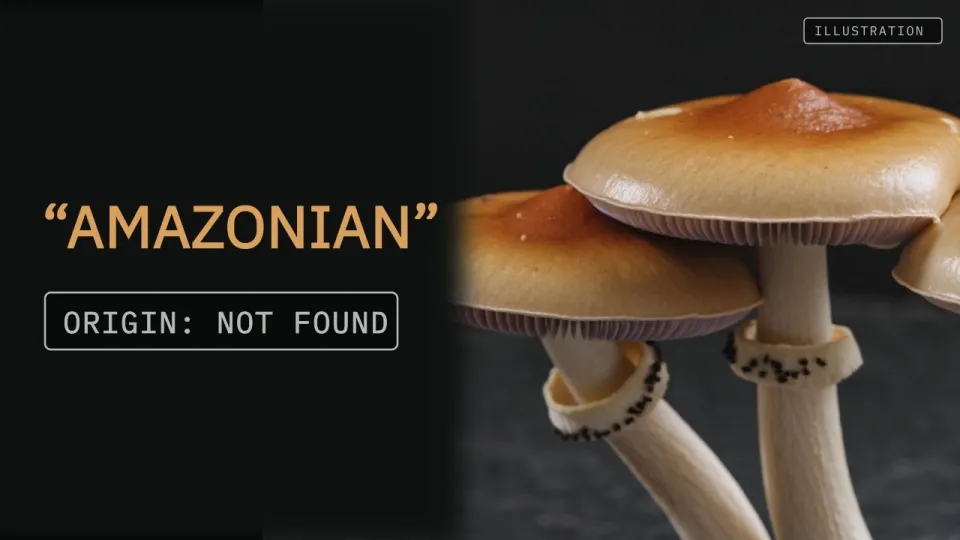
Video: Amazonian Mushroom: Following the Paper Trail Behind the Name
The Scientific Naming and Historical Paper Trail
The scientific classification of the Amazonian mushroom follows a complex paper trail involving multiple mycologists over decades. Early descriptions date back to specimens collected and documented in the mid-20th century. The name Psilocybe amazonica was proposed in scientific literature based on specimens from the Amazon, but taxonomic revisions and genetic sequencing have led to debates on whether these specimens represent distinct species or varieties of known Psilocybe species 05:40. The video "Amazonian Mushroom: Following the Paper Trail Behind the Name" on Shroomverse channel details how researchers traced original descriptions, herbarium samples, and publications to clarify the mushroom's identity.
Ethnobotanical and Psychoactive Importance
The Amazonian mushroom holds significant ethnobotanical importance among native Amazonian tribes. It has been traditionally used in rituals for healing, divination, and spiritual experiences. Scientific research into psilocybin mushrooms has revealed their potential in psychotherapy, prompting renewed interest in Amazonian species as a source of bioactive compounds. Understanding the precise species identity is crucial for safe and effective application in both traditional and modern contexts 08:50.
Taxonomic Challenges and Molecular Studies
One of the main challenges in defining the Amazonian mushroom lies in the morphological similarity between species and the variability of their physical traits depending on environmental conditions. Molecular studies, including DNA sequencing, have become essential tools for resolving these taxonomic issues. Such studies have sometimes reclassified previously named species or merged them under a single species concept. The Amazonian mushroom's genetic data help differentiate it from other Psilocybe species found in Central and South America 12:20.
Future Research Directions and Conservation
Ongoing research aims to better understand the biodiversity of Amazonian psilocybin mushrooms and their ecological roles. Conservation efforts are important as habitat loss threatens many Amazonian fungi species. Additionally, clearer taxonomic understanding supports sustainable harvesting and legal frameworks for their use in medicine and culture. The paper trail behind the Amazonian mushroom's name emphasizes the need for rigorous scientific documentation in mycology 15:05.
Conclusion
The Amazonian mushroom is a group of psilocybin-containing fungi associated with the Amazon basin, known for both traditional use and modern research interest. Its scientific background involves a detailed historical and taxonomic investigation to clarify its identity and classification. This understanding enriches our knowledge of ethnobotany and supports future studies in psychedelic medicine. The Shroomverse channel provides an insightful analysis of the paper trail behind the Amazonian mushroom's name, highlighting the importance of precise mycological research.
Key takeaways
- The Amazonian mushroom refers to Psilocybe species found in the Amazon basin.
- Its scientific naming involves historical paper trails and taxonomic debates.
- The mushroom has significance in ethnobotany and psychedelic research.
- The name Amazonian mushroom is linked to specific specimens described in scientific literature.
- Understanding its taxonomy helps clarify its cultural and scientific importance.
Source: Amazonian Mushroom: Following the Paper Trail Behind the Name · Markdown version
Questions & answers
What species does the term Amazonian mushroom refer to?
The Amazonian mushroom commonly refers to several psilocybin-containing Psilocybe species native to the Amazon rainforest region rather than a single species.
Why is the scientific naming of the Amazonian mushroom complicated?
Its naming is complicated due to historical descriptions, morphological similarities between species, taxonomic revisions, and genetic studies that have led to debates about species distinctions.
What is the ethnobotanical significance of the Amazonian mushroom?
It has been traditionally used by Amazonian tribes for spiritual rituals, healing, and divination, and it is important for both cultural heritage and modern psychedelic research.
How do molecular studies contribute to understanding the Amazonian mushroom?
DNA sequencing and molecular analysis help resolve taxonomic challenges by distinguishing closely related species and clarifying their classification within the Psilocybe genus.